
What Is Logistics ERP Software?
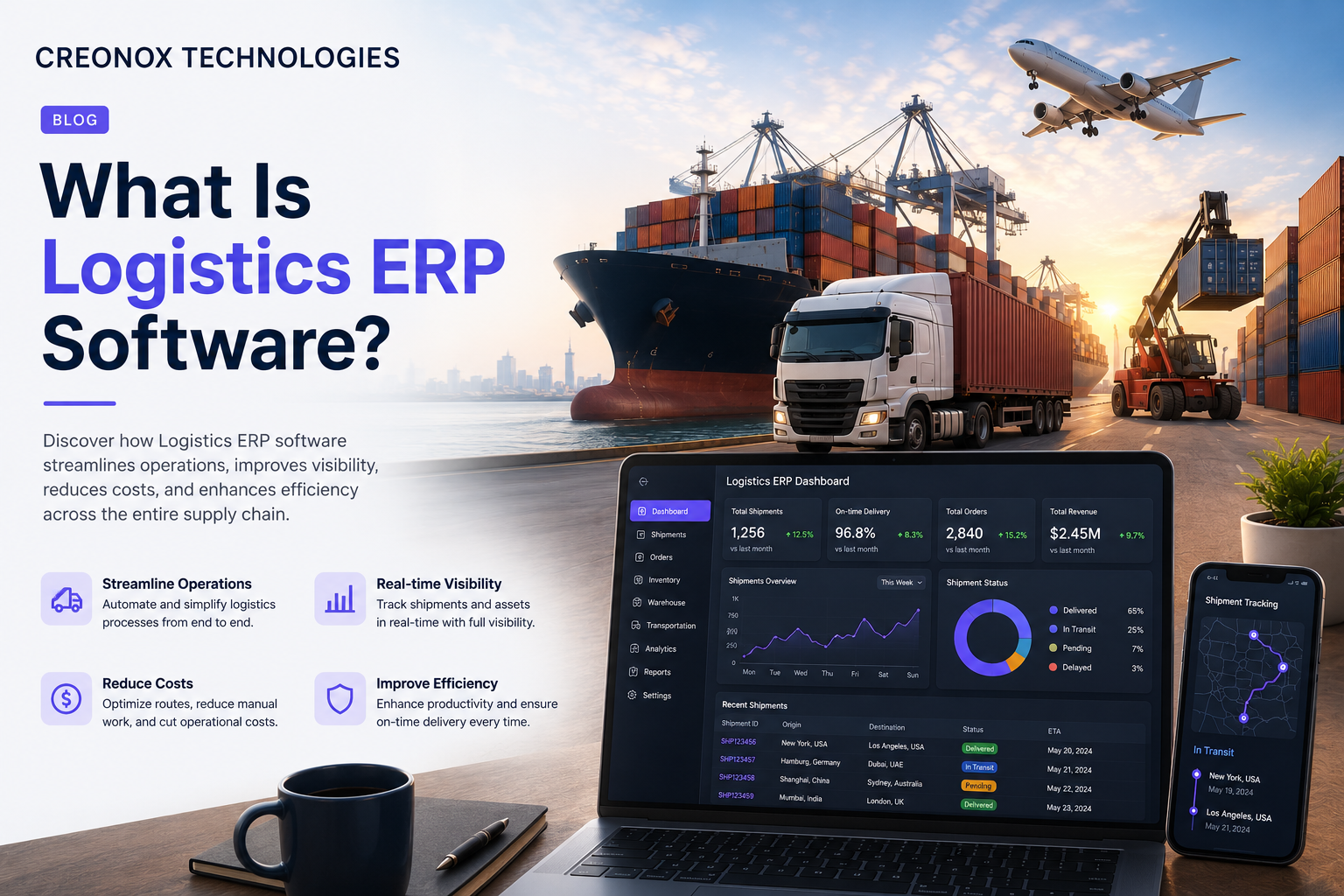
Logistics ERP software is a centralized system that helps logistics, transportation, warehousing, and supply chain businesses manage their operations from one platform. It connects key functions like order management, inventory tracking, fleet coordination, billing, warehouse operations, and reporting, so teams can work with more accuracy and less manual effort.
What Is Logistics ERP Software?
Introduction
Modern logistics operations depend on speed, accuracy, and seamless coordination. Every shipment, inventory update, customer order, and delivery schedule must work together without delays. When businesses rely on spreadsheets, disconnected applications, or manual processes, managing operations becomes increasingly difficult as the business grows.
Logistics ERP software addresses these challenges by bringing core business functions into a single, centralized platform. It provides real-time visibility across operations, automates routine tasks, and enables teams to make informed decisions using accurate data. By connecting departments and processes, an ERP system helps logistics companies improve efficiency while maintaining greater control over daily operations.
What Is Logistics ERP Software?
Logistics ERP (Enterprise Resource Planning) software is an integrated business management system built specifically for logistics, transportation, warehousing, and supply chain operations. It centralizes operational data and business processes into one platform, allowing organizations to manage their entire logistics workflow efficiently.
Rather than using separate software for inventory, transportation, finance, warehousing, and reporting, a logistics ERP system connects every department, ensuring information flows seamlessly throughout the organization.
A modern logistics ERP solution typically includes:
Inventory management
Order processing
Shipment and dispatch management
Fleet management
Route planning and optimization
Warehouse management
Billing and invoicing
Financial management
Reporting and business analytics
By integrating these functions, logistics companies can reduce operational complexity, improve visibility, and streamline day-to-day activities.
Why Logistics Companies Use ERP Software
Logistics businesses manage thousands of moving components every day. Inventory levels change constantly, vehicles travel across multiple locations, customer orders must be fulfilled quickly, and shipments require accurate tracking.
Without an integrated system, teams often face challenges such as:
Duplicate data entry
Manual paperwork
Limited operational visibility
Communication gaps between departments
Slow reporting
Increased operational errors
Logistics ERP software eliminates these inefficiencies by providing a centralized source of information that keeps every department aligned. Teams can access the same real-time data, reducing confusion and enabling faster, more accurate decision-making.
Core Features of Logistics ERP Software
Inventory Management
Track inventory levels across warehouses in real time, monitor stock movement, manage replenishment, and reduce inventory discrepancies.
Order Management
Manage customer orders from creation through fulfillment while maintaining visibility into order status, processing times, and delivery schedules.
Warehouse Management
Optimize warehouse operations by managing storage locations, inventory movement, picking, packing, receiving, and dispatch activities.
Transportation Management
Plan shipments, assign vehicles, optimize delivery routes, monitor fleet utilization, and improve transportation efficiency.
Fleet Management
Monitor vehicle performance, maintenance schedules, fuel consumption, driver assignments, and fleet availability from a centralized dashboard.
Billing and Financial Management
Generate invoices, manage payments, track operational expenses, calculate transportation costs, and simplify financial reporting.
Shipment Tracking
Monitor shipments throughout the delivery process with real-time updates, helping businesses improve operational visibility and respond quickly to unexpected changes.
Reporting and Analytics
Generate operational reports, analyze business performance, identify trends, and make data-driven decisions using real-time dashboards.
Benefits of Logistics ERP Software
Implementing a logistics ERP system offers significant operational advantages for businesses of all sizes.
Improved Operational Efficiency
Automation reduces repetitive manual work, allowing teams to focus on higher-value tasks while improving process consistency.
Better Visibility
Real-time dashboards provide a comprehensive view of inventory, shipments, warehouse operations, and transportation activities from one platform.
Increased Accuracy
Centralized data minimizes duplication and manual entry errors, resulting in more reliable information across departments.
Faster Decision-Making
Access to current operational data enables managers to identify issues quickly and make informed decisions with confidence.
Reduced Operational Costs
Efficient resource allocation, optimized routes, automated workflows, and improved inventory control help lower operating expenses.
Better Customer Service
Accurate order tracking, timely deliveries, and transparent shipment information contribute to a better customer experience.
Scalability
As logistics operations expand, an ERP system can support increased transaction volumes, additional warehouses, larger fleets, and more complex workflows without requiring separate systems.
Who Can Benefit from Logistics ERP Software?
Logistics ERP solutions are suitable for organizations operating across various sectors, including:
Third-party logistics (3PL) providers
Freight forwarding companies
Transportation companies
Warehouse operators
Distribution businesses
Supply chain organizations
Manufacturing companies with logistics operations
E-commerce fulfillment providers
Businesses that manage inventory, transportation, warehousing, or large-scale distribution can benefit from centralized operational management.
Choosing the Right Logistics ERP Software
Selecting the right ERP solution depends on your organization's operational requirements and long-term growth plans.
When evaluating a logistics ERP system, consider whether it offers:
Real-time operational visibility
Flexible workflow management
Warehouse management capabilities
Transportation and fleet management
Financial integration
Comprehensive reporting
Scalability for future growth
Integration with existing business systems
User-friendly interface
A well-designed ERP platform should simplify operations while providing the flexibility to adapt to changing business needs.
Conclusion
Logistics ERP software provides a centralized platform for managing transportation, warehousing, inventory, order processing, billing, and reporting. By integrating critical business functions into one system, organizations gain better visibility, improve operational efficiency, reduce manual work, and make faster, data-driven decisions.
As logistics operations continue to become more complex, having an integrated ERP solution helps businesses maintain control, improve coordination, and support sustainable growth while delivering reliable service to customers.
Related Insights
ERP vs CRM: Complete Guide for SMEs
Small and medium-sized businesses often hear about ERP and CRM at the same time, but these systems solve different problems. ERP helps manage internal operations, while CRM helps manage customer relationships. Understanding the difference can help SMEs choose the right software at the right stage of growth.
How AI-Powered CA Operation Systems Like CAIQ Are Revolutionizing Audit & Compliance for Indian CA Firms in 2026
Are you a Chartered Accountant struggling with manual audit processes and overwhelming compliance workloads? CAIQ by Creonox is the AI-powered CA operation system that transforms how CA firms operate in 2026. It automates audit execution, GST filing, Income Tax returns, and MCA compliance while detecting fraud patterns. CA firms achieve 70% time reduction, 90% fewer errors, and complete 3x more audits with the same team. Visit caiq.creonox.com to request your free demo.
Why Most Businesses Don't Need More Software — They Need Better Operating Systems
Most businesses don't suffer from a lack of software—they suffer from disconnected systems. Discover why intelligent operating systems are becoming the foundation of modern business operations.